

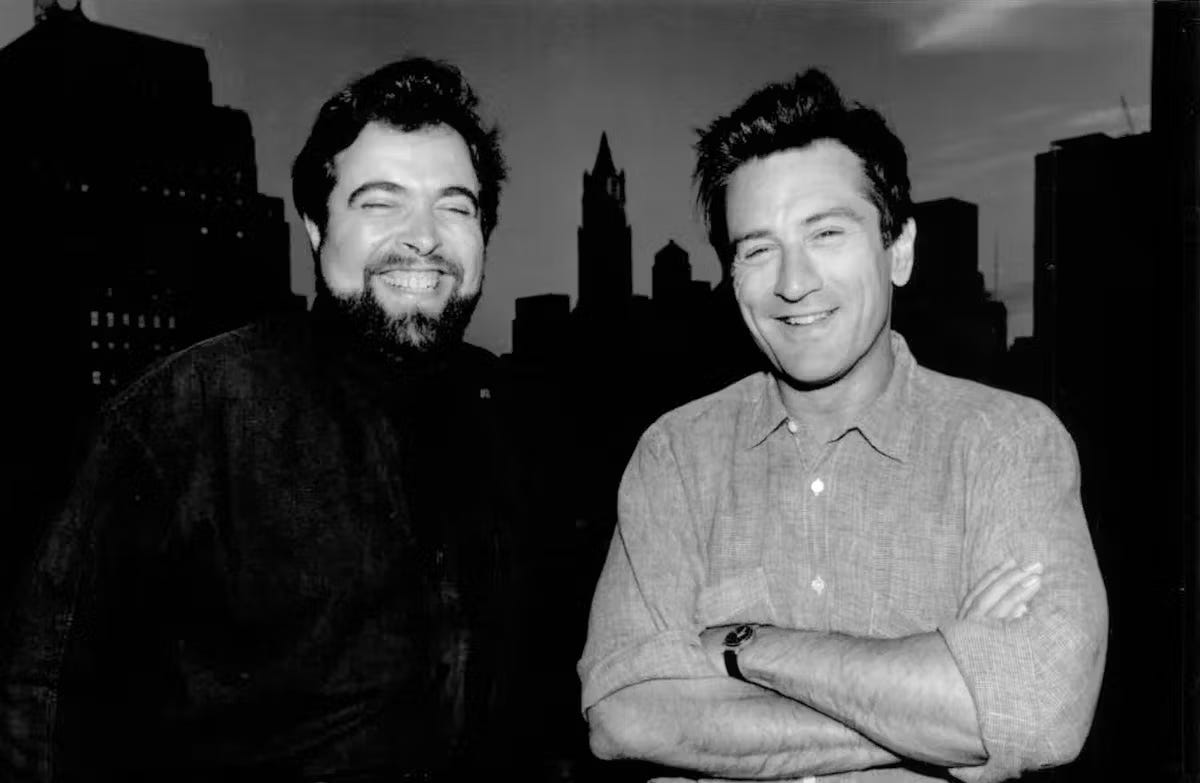
I absolutely crushed an advance copy of the laser-focused and highly enjoyable Drew Nieporent “restaurant man” memoir, I’m Not Trying to Be Difficult: Stories from the Restaurant Trenches. The book is out in September, and while some are still huffing the fumes of the Keith McNally book buzz from the spring, I am here to say that Nieporent’s book, while written more simply and in the traditional linear manner, spoke to me in a deeper way than the also terrific I Regret Almost Everything.
While McNally’s story is dripping with introspection, sly literary references, horniness, and an unexpected passion for dramaturgy (the section on McNally as a young actor is my favorite), Nieporent tells the story of a man so obsessed with restaurants that there’s nothing else to write about in his life but restaurants (with a few New York Jets references thrown in). It’s a good thing, then, that the restaurants driving this story are not just iconic in name—including New York’s Montrachet, Tribeca Grill, and Nobu—but deeply influential in a way that is felt in every corner of the modern dining scene. And I’m not just talking about the oft-cited miso black cod, a dish that originated at Nobu and is now found on nearly every sushi and izakaya menu in America today.
Nieporent was raised in Stuyvesant Town in Manhattan and graduated from Stuyvesant High School in 1973. He attended Cornell University’s School of Hotel Administration and was soon disillusioned by the academic coursework that focused on banquets and catering. (Cornell catches some strays in this memoir.) He landed a job at NYC’s first clubstaurant, Maxwell’s Plum, and later transferred to Tavern on the Green, where his focus on front-of-house training and guest relations helped him to rise through the organization quickly.
Decades before Will Guidara and Cousin Richie on The Bear made magic with NYC hot dogs and fake snow, Nieporent was meticulously logging his guests’ preferences like a Netflix CIA operative and moving tables (literally) to make NFL Hall of Fame coaches happy. This was long before computers and smart phones served as lubricant for the grinding gears of front-of-housemanship, and I cannot imagine the energy it required. Nieporent seems to never tire.
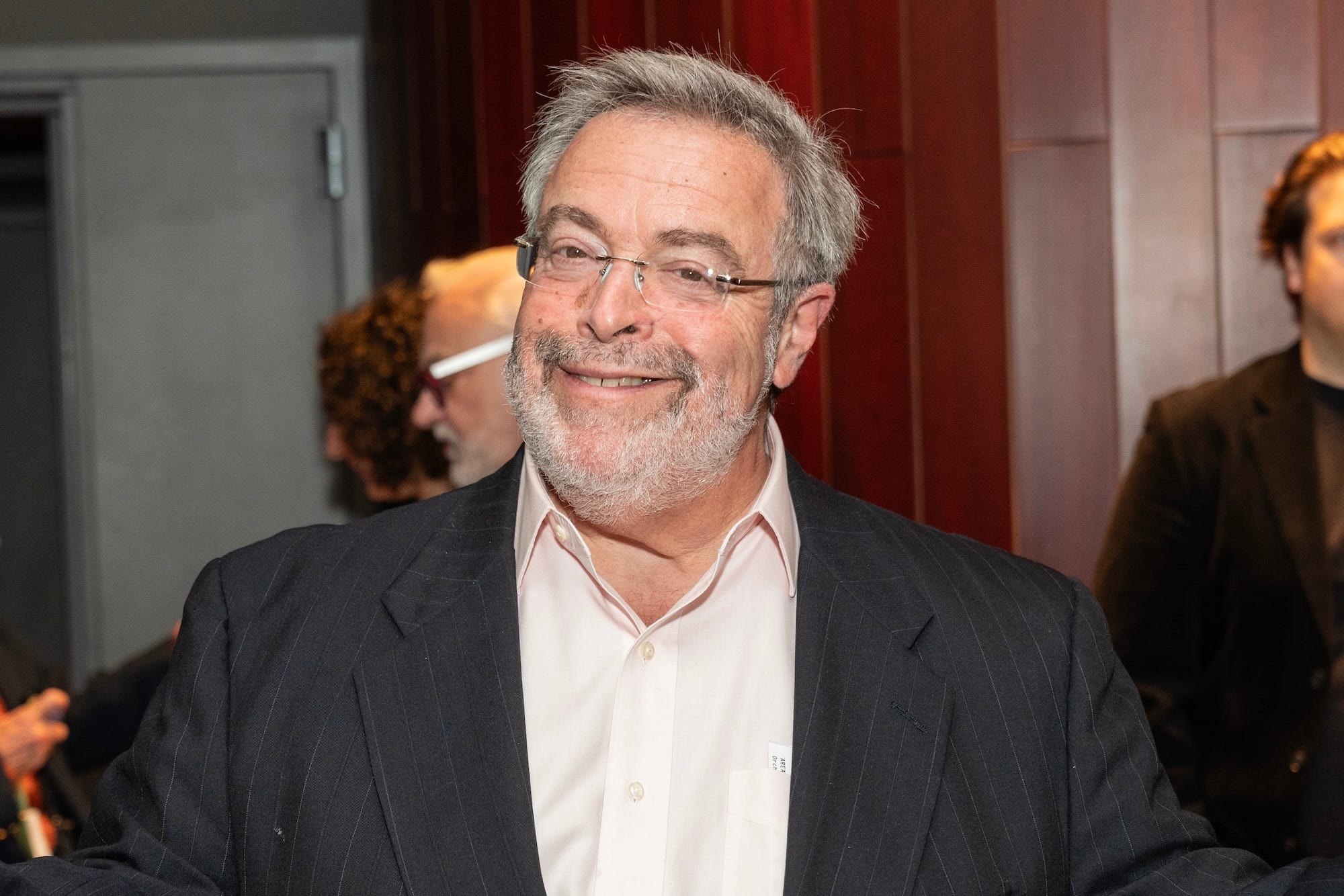
The story gets really good when Nieporent links up with the young chef David Bouley to open Montrachet in the backwaters of Tribeca in 1985. Bouley is a maniac, always was, and the drama, while downplayed in the memoir, was considerable. The people came for the polished but relaxed modern American cooking and fine-pointed wine service (which introduced the world to the great wine mind of Daniel Johnnes), as did the critical stars—Montrachet held three stars for decades.
The plot thickens like a perfect beurre blanc when Nieporent connects with Montrachet regular Robert De Niro to start a restaurant at the actor’s soon-to-open Tribeca Film Center. Tribeca Grill and Nobu (opened in 1994) are the heart of this book, and I’m not going to Wikipedia this story. Nieporent’s life has a lot of highs as well as a few lows (a robbery, health setbacks, and a good fight with Bobby D), and through the many anecdotes—beautifully related with his collaborator (and my friend) Jamie Feldmar—we get a story that needed to be told about a true legend in the game.
I first met Nieporent while covering NYC restaurants in 2007. The guy always remembered my name and my outlet. That’s a gift. These were the early days of Eater, and I am pretty sure they drove him nuts. I loved that era so much. Nieporent’s obsession with media comes up a few times throughout the memoir, and there are some juicy interactions with Frank Bruni and other critics threaded into the story.
I’m having Nieporent in the podcast studio this week to record an episode of This Is TASTE, and my interview prep took me to San Francisco, where he opened Rubicon with the great Traci Des Jardins, and on to NYC’s Corton, with the infamous Paul Liebrandt. (Remember him?)
“I’m not obsessed with making money, but a restaurant has to break even,” Nieporent writes near the end of the memoir, in a melancholy section about the 2023 closing of Bâtard at 239 West Broadway, a lease he held for more than 30 years. And it’s true—this book isn’t about making money. It’s not even about breaking even. Those Nobu quarterly allocations are probably still hitting pretty nicely. It’s a book about a man who is obsessed with restaurants. And for many of us who are in the same boat, either professionally through writing about the industry or simply projected through a big number on that December Resy recap, we see a kindred spirit in Nieporent. Here’s a guy I’d want to have a coffee with to hear some good Maxwell’s Plum stories. After reading McNally’s book, I just wanted to take a shower.
Returning to Dinamo in Richmond, Virginia
Dinamo is family (literally—my sister-in-law Mya is one of the owners). So there’s some bias when I say that it’s one of my favorite restaurants in America. I returned for the first time in years, and nothing has changed (and that’s such a good thing). As a recap, the restaurant is from the group behind Edo’s Squid and the late, great Mamma Zu. These are true IYKYK Richmond spots, and Dinamo carries on the tradition.
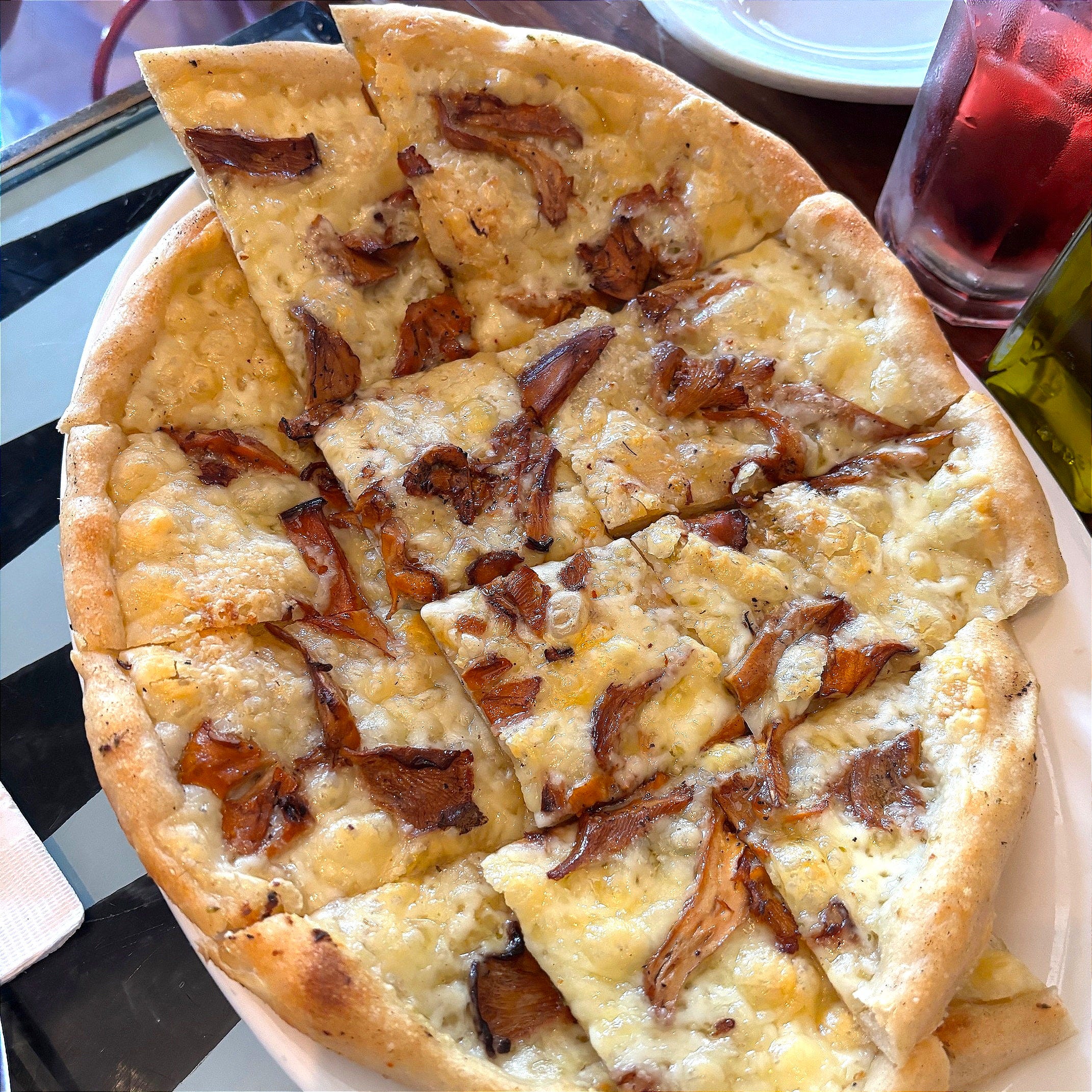
The cooking is consistent. The homemade sausage, ground coarsely and full of flavor, sits perfectly next to bricks of seared (though creamy and shockingly plant-based) polenta. The pizzas are a must—thin in a Roman style, with an olive-oil crust and topped with fontina, if you know to order the white pie early and often. They do amazing things with maitake and king oyster mushrooms, and on this visit, the sauté and seasoning were spot-on. If rockfish is in, order it. We had branzino and a very nice ribeye, and our meal was complete. The restaurant is a rarity in that the menu is nearly identical to the one it had upon opening 12 years ago. The space feels worn in, in the best way. (I think of Frank in New York’s East Village.) Like I said, Dinamo is family, but it’s still one of America’s greats, in any book.
Late 90’s/early aughts were prime Montrachet days and the wine program was epic. As a “brand”, Nobu perhaps his biggest hit but food and wine at Montrachet was a reference standard
The very first time we came up from Florida to do a James Beard dinner. Drew invited us to use kitchen space at Tribeca Grill to prep. I will never forget that kindness. That began a lifelong friendship in an industry that often has a short memory. I will be purchasing that book this week. Thank you, Matt.