

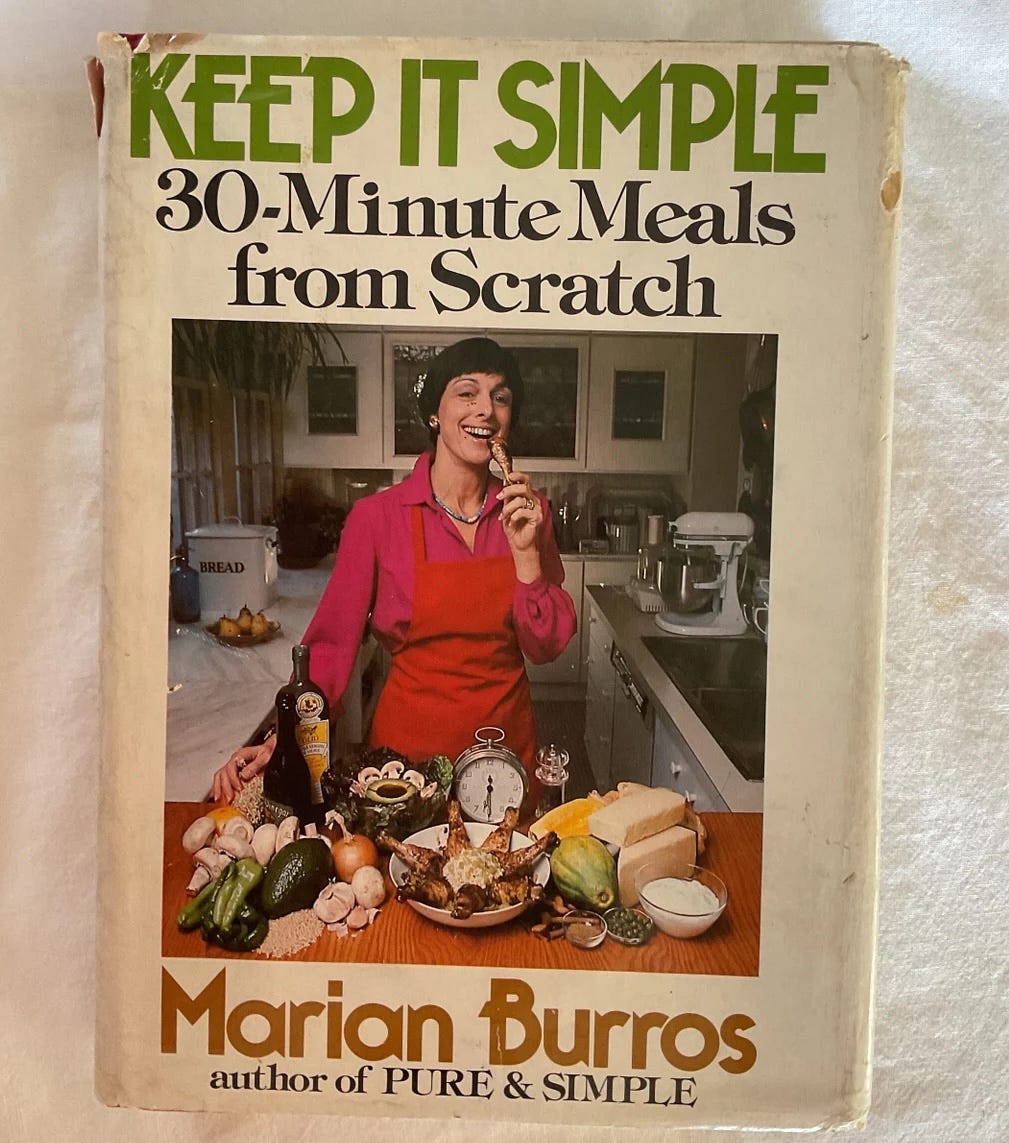
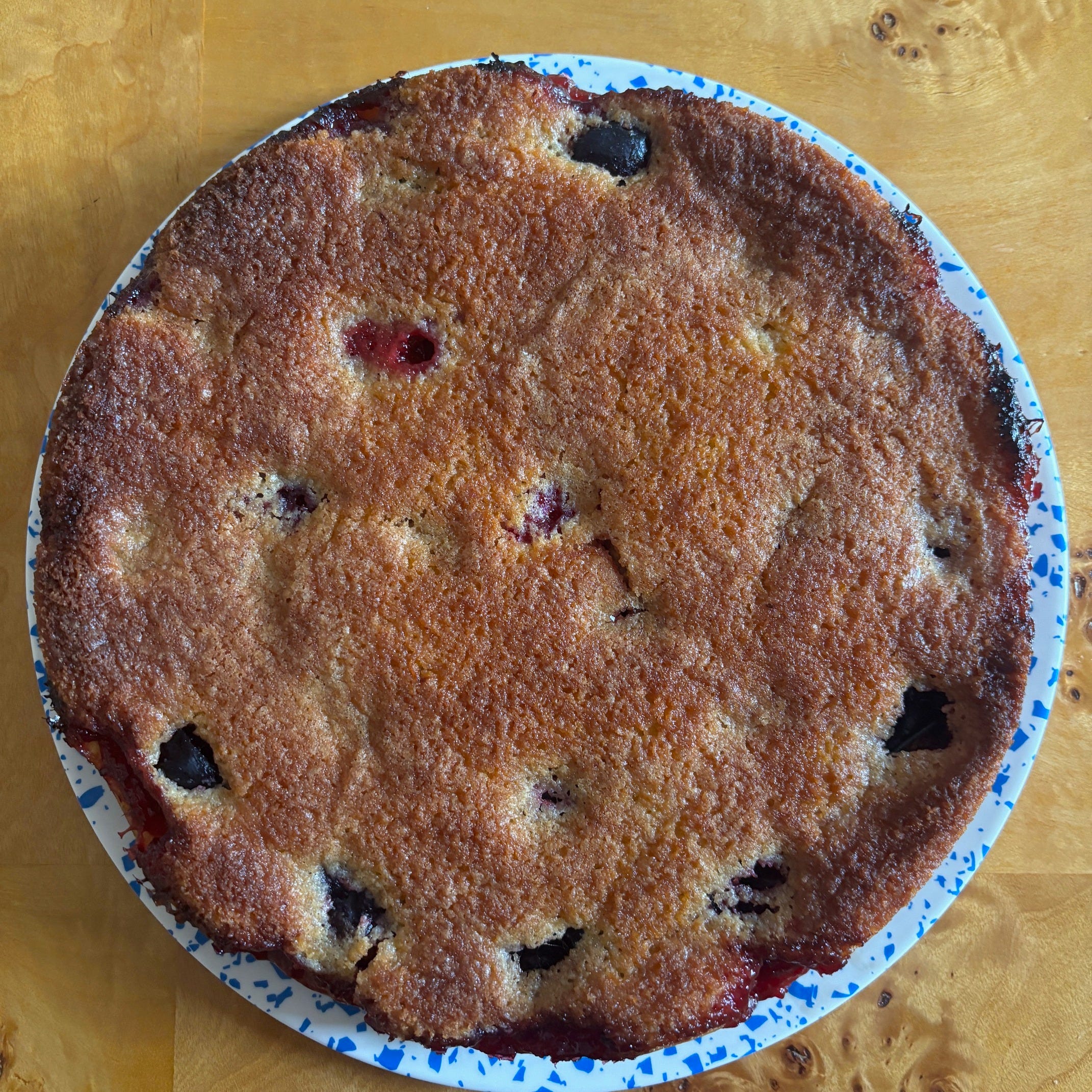
Marian Burros died last week at 92. I didn’t personally know Marian, and I had placed her name near the top of a Notes list in my phone called “legends” that I often update and review when thinking about future This Is TASTE bookings. I’m sad that this conversation was never able to take place. I would have (naturally) asked her about the plum torte, which Pete Wells memorialized a few days after her passing. It’s popular, widely written about, and currently baking in my own kitchen. I had an hour to spare (the simple torte’s baking time), so why not write some things down about Marian, and particularly about an afternoon in Philadelphia that I will never forget?
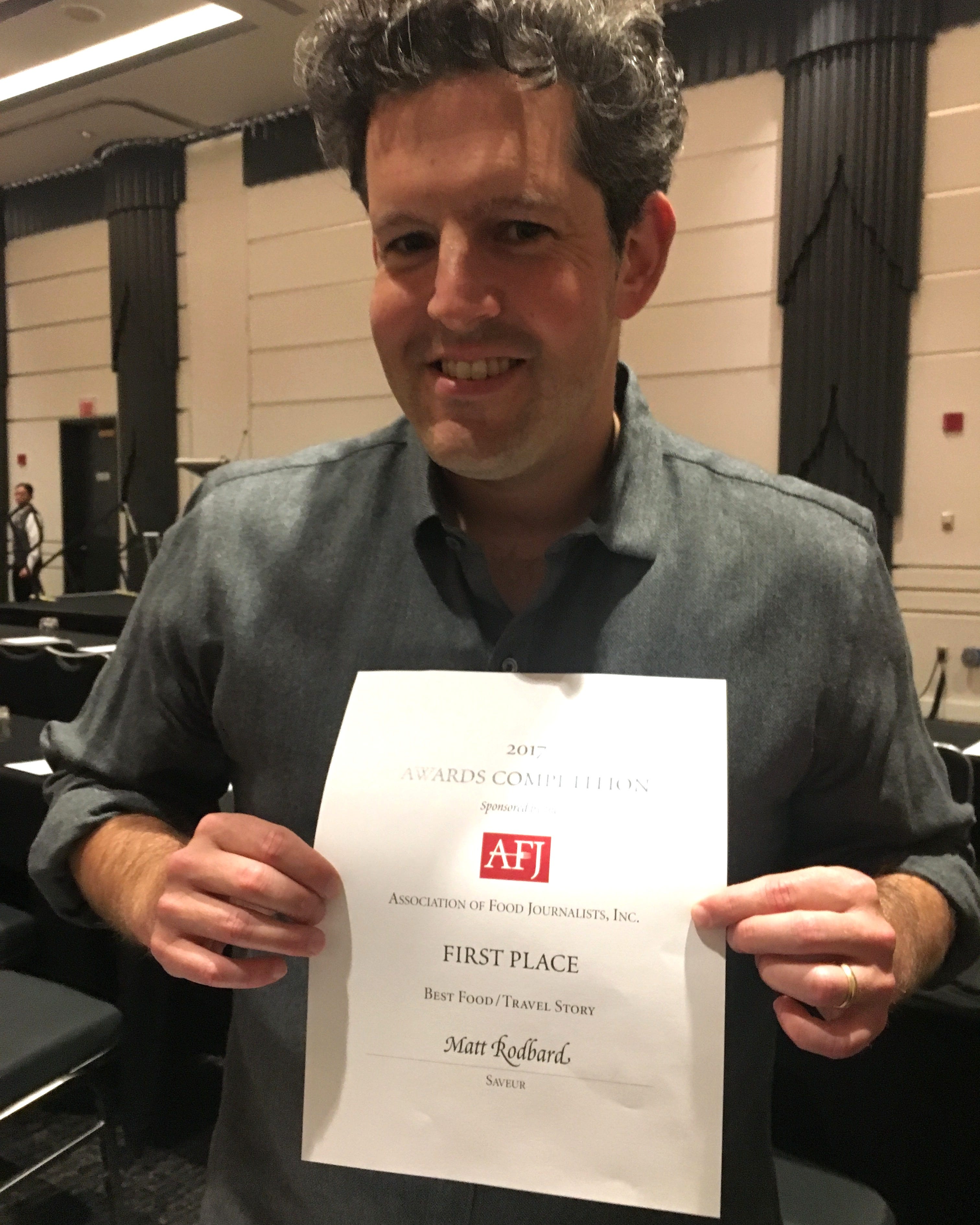
Marian was vice president of the Association of Food Journalists (AFJ), and I had gathered with other journalists in a ballroom in Center City in 2017 for the group’s annual awards program. I was nominated (and won) for some writing I had done for Saveur. More memorable—though the award came with a cash prize, which was both rare and quite generous—was Marian’s keynote address. Advanced in age but still energized while standing at the podium, she recalled her work as a food editor at the Washington Post and writing for the New York Times, particularly breaking a Post story on ITT Continental Baking Company’s reduced-calorie, high-fiber Fresh Horizons Bread—which Marian’s monthslong reporting revealed contained powdered cellulose, derived from wood pulp. Nasty stuff, and nobody knew!
Marion was no cupcake food writer. Junkets, which became popular in the 1970s, were strictly off-limits, and she was a pioneer in bringing investigative reporting to food. Eventually, through her work at AFJ, she helped to write and evolve a code of ethics that today sits in great contrast to the day-to-day work of the typical food writer. It’s really worth reading, and I find myself returning to it from time to time if I’m questioning something in my work as a writer or as an editor at TASTE.
It’s important to acknowledge that some bullet points, particularly the guidance to not accept samples over $50 in value, came from a healthier time for food journalism, when staff positions and modest to Condé-level expense accounts were the industry norm. But the core ideas of writing under a real name, fact-checking press releases, clearly citing sources (something I wrote about recently), and not leveraging editorial status for financial gain still stand.
There is currently a great blurring happening between journalist and influencer, and many newsrooms that Marian considered sacred land, including her own New York Times and the Washington Post, are setting up their editorial teams to break big moments on social media. Staff writers and restaurant critics are filming snappy vertical videos with virality in mind. Recipes titles are A/B tested for instant cult status, and influencers themselves are publishing in the coveted typefaces once reserved strictly for Marian’s milieu.
This is certainly no criticism. My work at TASTE overlaps with corporate partners on a near-daily basis, and we’re always shooting for virality with our video clips from the podcast studio (and we sometimes get there). We rely on our partnership support to continue making the work we feel is essential in an era of shuttering publications and shrinking editorial teams.
I wanted to ask Marian what she thought about all of this. Would she have been critical of food writers with bylines in major publications shaking hands with corporate Instagram accounts and taking that Poppi money? How did she feel about the chummy nature of relationships between writers and chefs, and what about podcasts? Did these often entertainment-first forms of “food writing” require the same rigor as the printed word? What about AI? I will never know what Marian would have said in the TASTE studio, but in her speech at the conference in Philadelphia, I recall her ending her remarks with a plea to the gathered journalists: to not be swayed by corporate pressures, and to ultimately write the truth. I imagine this would remain her passion.
The AFJ sadly folded in 2020. At the time, it was led by the terrific journalist Hanna Raskin and the reason given for its closure was not the COVID-19 pandemic but an outdated financial model that relied too heavily on newspapers footing the yearly membership dues and award entry fees. The AFJ’s code of ethics, though, is still very much a live link, and I would guess that if Marian had joined me in the studio, she would have much rather talked about the twists and turns of food writing than about her famous torte—which is now cooling on my counter and, in my opinion, kind of the perfect fall afternoon bake.
I love that you are writing about ethics. It's not much of a topic these days, but I keep ringing the bell. (Despite this I have also made her torte several times.)
In my book, Will Write for Food, I wrote about ethics for freelance writers, food bloggers, restaurant reviewers and more. I quoted from the AFJ's code of ethics. Also on my blog, I devoted an entire category to ethics, as I have in my newsletter. Like Marion, it will always be an issue for me.
AI is a subject of great to concern as well. I have written about it several times in my newsletter and taught a class about it for IACP.
Recently, I wrote about the practice of inserting other peoples' images into one's own newsletter, blog post or even Instagram. The keynote speaker of a conference I attended took me aside to tell me she was about to pay a $10k fine for using photos that were not hers. She had no idea she was breaking the rules. This is a small price to pay, from what I have read!
So there is a need to keep the discussion of ethics alive. Thank you for addressing Marian Burros' legacy.