
Is Shrimp Overrated?
Some overdue thoughts on overcooking shrimp.

I’ve opened paid subscriptions. You can upgrade if you’d like to support my work. There will be subscriber-only live streams, and the Founding Member subscription includes an annual meeting with me, which can take place over Zoom or IRL in New York or Los Angeles. If you’re looking for an hour of consulting, trendspotting, or conversation, hit that button.
The Maiorano-Stivers, close family friends from Kalamazoo, have been bringing a platter of jumbo shrimp and cocktail sauce to Thanksgiving for as long as I can remember. It sits on the table next to plates of soft cheese and mini quiches, and it’s usually the first to disappear. It’s obvious if you’ve ever peeked in the carts at Costco that shrimp is one of the most popular foods in America—it has been for decades—and yet it gets almost no love from people in my seat (food writers). There’s snark about the shrimp cocktail (more on that later). There’s side-eye directed toward fried shrimp. While it’s one of the most popular foods, it simply gets no respect—and some may say it’s an overrated food.
Here’s my position: Shrimp is not overrated. Shrimp is, though, often overcooked, which might be why there’s so much judginess.
Daniel Holzman and I talked about shrimp for a long time when we were writing our book, Food IQ. Here’s the deal according to Daniel. The target cooking speed for shrimp is either very fast or very slow—and it’s the middle ground that gets people into trouble. Poach them for a couple minutes and serve just cooked, still tender, maybe a little translucent at the center. Or go the other direction entirely: braise them low and long, the way a good gumbo does, slowly breaking down the proteins until you get something silky and giving. Everything in between—the rubbery, curled-up, squeaky shrimp that show up in stir-fries, on salads, in bad pasta—that’s a cooking problem, not a shrimp problem.
Let’s zoom out for a second. Why do we (some, many, but not food writers) actually love shrimp so much? Well, first, because they are delicious and easy to eat. They are on the pleasant side of innocuous—the opposite of fishy or gamy. And their texture is unanimously adored. Shrimp is versatile and works as an amazing vehicle for sauces: butter and herbs in a scampi, fish sauce and sugar in a Vietnamese-style braise, giant fried gulf shrimp, or baby shrimp Louie.
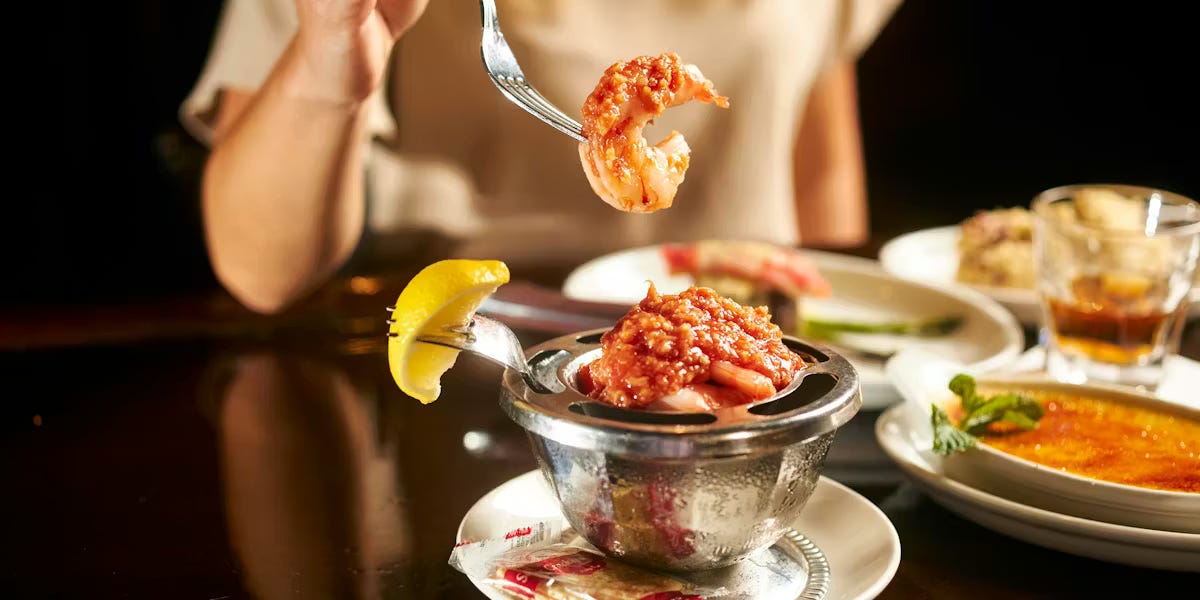
Everybody has a favorite. Shrimp cocktail (poached shrimp served chilled with a piquant ketchup-and-horseradish sauce) has come in and out of style several times over since its popularization in the 1950s, when modern freezing technologies first allowed the shrimp to travel farther from the sea, and crimson cocktail sauce made the jump from its long-standing relationship with oysters to crowning the little-legged crustacean king of cocktail. Any How Long Gone listener will know Chris Black’s affinity for the cocktail, and I’m here for it. And fellow podcaster Jordan Okun, of MAD FOOD WORLD, served a tribute to the St. Elmo Steakhouse cocktail at a food event last fall. You can get the restaurant to ship 16 black tiger shrimp, with sauce, to your door for a tangy $99.
As for shrimp cocktail’s parturition, there are a lot of claims but little evidence as to whether it originated in Mexico and traveled northward or was invented elsewhere in the Americas and found its way south. The bottom line is that, for a treif animal that looks an awful lot like a baby cockroach (sorry, it’s true), shrimp is impressively popular.
When buying shrimp in bulk, they are sold as a unit number per pound to account for variation in size. A U32 means 32 pieces per pound, so the smaller the number, the bigger the shrimp. Cocktail shrimp or fried jumbo shrimp are typically larger, in the 18 to 24 range. There are thousands of species of shrimp in the world, but the ones found in supermarkets are primarily farm-raised and frozen, and many are very good. If you can find wild shrimp or spot prawns, which are absolutely delicious, make sure they’re still alive or freshly killed, as they spoil quickly.
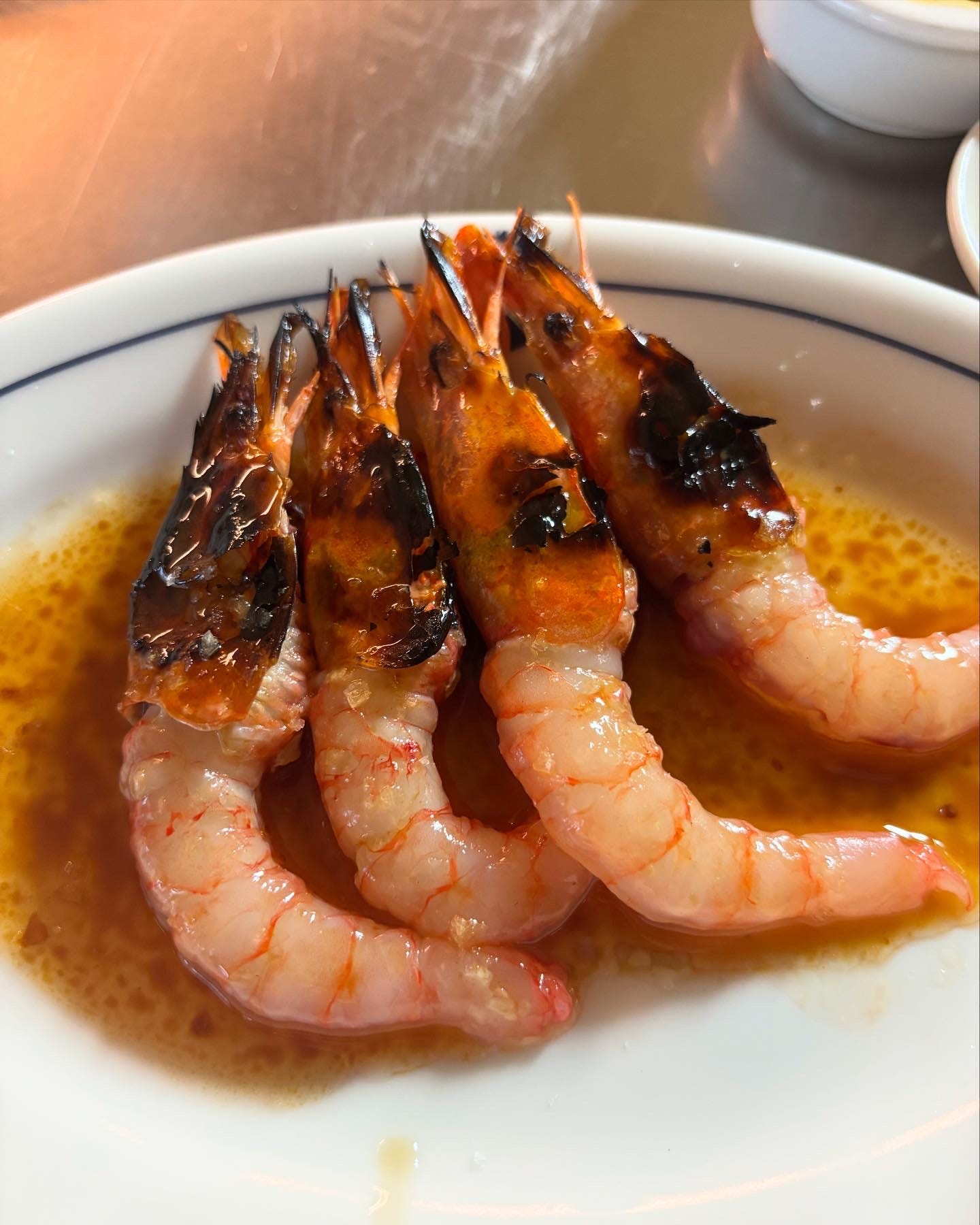
Whether you prefer to peel your own or enjoy the convenience of a composed bite, shrimp served head-on is always the way to go when available—the head keeps the juices in (like the lid of a pot), and when fried, the head (and the squishy flavor bomb that may or may not include shrimp blood, guts, brains, and exoskeleton) is by far the most delicious bit of the entire thing.

Now Let’s Update That Scene from Forrest Gump
In our book, Daniel and I agree with Benjamin Buford “Bubba” Blue: shrimp is the fruit of the sea, and it’s pretty great barbecued. But the film is now over 30 years old, and we figured that it might need an update. With shrimp, there are more than a few options. You can:
1. Braise them in fennel, tomato, and saffron.
2. Scampi them with herbs.
3. Pile them on toast.
4. Shrimp Louie them.
5. Thai salad them.
6. Smother grits with them.
7. Poach them with Old Bay.
8. Teppan them.
9. Tempura them.
10. Sri Lankan curry them.
11. Ajillo them.
12. Mozambique them.
13. Szechuan fry them.
14. Moqueca them.
15. Durban curry them.
16. Piri piri them.
Not overrated. Never overrated. Where I grew up in Malaysia we called them prawns, and the head-on rule was non-negotiable. That's where the real flavor lives. You suck the juices straight from the head before you even get to the meat and yes, it sounds gross to the uninitiated, but that concentrated sweetness is worth every raised eyebrow at the table.
Matt, you nailed it. Overcooked shrimp is a cooking problem, not a shrimp problem. Shrimp is one of the most forgiving ingredients when you respect it and one of the most punishing when you don't.
My all time favorite is Har Loke — a Malaysian stir-fry with fermented black beans, ketchup, and oyster sauce. Eat it with a hot steamed bowl of rice, yummy. It sounds unlikely on paper but it is one of the most deeply satisfying shrimp dishes I know. Worth adding to your updated Forrest Gump list.
Add it to the list, Matt.
Couldn't agree more with “Overcooked shrimp is a cooking problem, not a shrimp problem"!
Feels like shrimp suffers from being too popular for food people to take seriously sometimes. What’s your personal perfect shrimp preparation?